
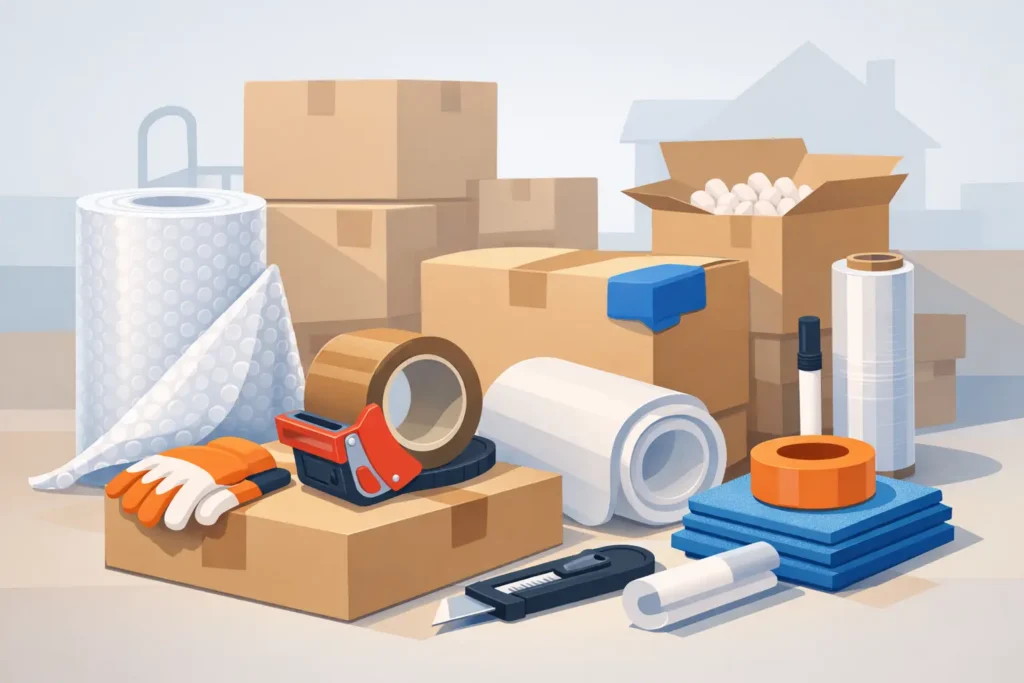
A move rarely goes wrong because someone forgot a box. It goes wrong when the box is too weak for its contents, the tape gives way halfway down the stairs, or the item needed on the first night is buried under a pile of unlabeled cartons. The right moving supplies make packing safer, loading quicker, and settling into your new home far less frustrating.
The best approach is not to buy every packing product available. It is to choose materials that match what you own, how far you are moving, and whether you are packing yourself or using a professional team. A studio apartment with mostly clothes and books needs a different plan from a family home with glassware, garden equipment, antiques, and large furniture.
Start With Moving Supplies That Fit the Job
Strong cardboard boxes are the foundation of most moves, but one size does not suit every item. Small boxes are safer for books, canned goods, tools, and other heavy belongings. Medium boxes work well for kitchenware, toys, and general household items. Large boxes should be reserved for lightweight, bulky things such as bedding, pillows, towels, lampshades, and winter coats.
Overfilled large boxes are one of the most common packing mistakes. They may look efficient, but they are difficult to carry and more likely to split. A box should be full enough that it will not collapse when stacked, yet light enough for one person to lift comfortably.
For most household moves, a practical set of supplies includes:
- Small, medium, and large double-wall boxes
- Heavy-duty packing tape and a tape dispenser
- Packing paper, bubble wrap, and protective foam where needed
- Permanent markers and clear labels
- Mattress bags, furniture covers, and stretch wrap
- A utility knife, scissors, and a few sealable bags for small parts
Buying good tape is worthwhile. Thin, low-quality tape can peel away in a warm car, damp garage, or tightly packed truck. Use several strips across the bottom seam of every box, especially for heavier contents. If you are reusing boxes, check for soft corners, old water damage, or weakened handles before trusting them with anything valuable.
Protect What Cannot Be Replaced
Some belongings are expensive. Others are valuable because they hold memories. Both deserve the same careful handling.
Wrap glasses, ceramics, and delicate ornaments individually in packing paper, then place them upright in a sturdy box. Fill empty spaces with crumpled paper so nothing can shift during transport. Bubble wrap provides excellent protection for particularly fragile pieces, but it works best when used selectively. Packing paper is often more practical for wrapping everyday glassware and keeping boxes from becoming unnecessarily bulky.
Avoid packing dishes flat in tall stacks. Plates are less likely to crack when packed on their sides, with paper between each one. Keep the box relatively small and label it clearly as fragile, including an arrow showing which way should remain upright.
Electronics need more than a quick layer of wrap. Take photographs of cable connections before unplugging televisions, computers, and entertainment systems. Put remotes, screws, cords, and small adapters into labeled bags, then secure those bags to the relevant item or place them in a clearly marked essentials box. Original packaging is ideal if you still have it, but a correctly sized double-wall box with cushioning around every side is a reliable alternative.
For artwork, mirrors, and framed photographs, use corner protectors and a purpose-made picture or mirror box when possible. Do not rely on a blanket alone. Blankets can prevent scratches, but rigid edges still need protection from knocks and pressure during loading.
Pack Room by Room, Not All at Once
Packing becomes harder when every room is open at the same time. Start with items you will not need before moving day: decorative pieces, books, off-season clothing, spare linens, and rarely used kitchen equipment. Work through one room, label each box, and then move on.
Write more than just “kitchen” on the label. A note such as “Kitchen – mugs and coffee machine parts – open first” saves time at delivery. If several people are helping unpack, add the destination room on two sides and the top of each box so the label remains visible when cartons are stacked.
Color-coded labels can help larger households, particularly when children have their own rooms. The trade-off is that colors alone are easy to forget. Use a color alongside clear written information, not instead of it.
Keep an inventory for high-value or sentimental items. It does not need to be complicated. A simple numbered list, with the box number and a brief description, provides reassurance and helps identify anything that needs special attention.
Use Furniture Protection Before Loading Day
Boxes are only part of the picture. Sofas, mattresses, dining tables, and wardrobes can be damaged by dust, moisture, scuffs, or contact with other items if they are not protected properly.
Mattress bags keep mattresses clean while they are being carried through hallways, loaded into a vehicle, or held in storage. Sofa and armchair covers help protect fabric from dirt and snagging. Stretch wrap can secure drawers and protect polished surfaces, but it should not be applied directly to delicate wood finishes or leather for long periods. In warm conditions, moisture can become trapped beneath plastic.
Furniture blankets and padded covers are especially useful for wooden tables, headboards, cabinets, and appliances. They cushion corners and reduce rubbing during transit. For glass tabletops, remove the glass where practical, wrap it carefully, and transport it separately in a suitable protective box or crate.
Dismantling furniture is often safer than trying to force large pieces through narrow doorways or staircases. Keep bolts, brackets, and assembly instructions together in labeled bags. Tape the bag to the inside of a drawer or another protected, obvious place – never directly to a finished surface.
Prepare an Essentials Box for the First 24 Hours
The most useful box in the house is often the one that never goes on the truck until last. Your essentials box should travel with you whenever possible. It can include medications, important documents, phone chargers, keys, toiletries, a change of clothes, basic tools, snacks, drinks, and items needed for children or pets.
Add cleaning wipes, toilet paper, a flashlight, and a small first-aid kit. If you are moving with young children, familiar bedtime items can make the first night in an unfamiliar room feel more manageable. If you are moving in winter or expect a delayed delivery, include a blanket and warm layers.
This box is not about packing perfectly. It is about avoiding the avoidable stress of searching through twenty cartons for a charger, prescription, or kettle.
Know When Professional Packing Is the Better Choice
Packing yourself can reduce upfront costs, especially for a smaller local move with plenty of time available. It also gives you direct control over how personal belongings are sorted. But it takes longer than many people expect, and poorly packed items can create problems on moving day.
Professional packing is often a sensible choice when time is short, there are fragile collections or large quantities of kitchenware, or a move involves storage or a long-distance shipment. Experienced packers use the right cartons, wrapping methods, covers, and loading practices for the items in front of them. They can also dismantle and protect furniture that would be difficult to manage safely without the right equipment.
At Middleton Moving, packing support can be tailored to the move. Some customers prefer help with only the fragile items and larger furniture, while others want a full packing service so their home is prepared efficiently before collection. The right level of support depends on your schedule, budget, and how much you want to handle yourself.
Keep Supplies Accessible Until the Door Closes
Do not pack away your tape, markers, scissors, utility knife, and spare labels too early. Keep a small packing kit with you through the final walk-through. There are always last-minute items: a lamp that needs wrapping, a drawer of chargers, or a box that needs reinforcing.
Before the vehicle leaves, check cupboards, loft spaces, sheds, garages, and outdoor storage. Then keep your essentials box, paperwork, and packing kit close by. A few well-chosen supplies and a clear labeling system give every item a safer route from your old home to the place where it belongs next.